Overview
During the SHAD Design Challenge at the University of British Columbia, my team was tasked with a broad and complex question: How might we help Canadians treat freshwater with more respect?
Over the course of the program, we moved from ambiguity to a tangible, user-centered solution. Through research, interviews, and iteration, we designed Grey Return, a two-step greywater filtration system paired with a companion app that enables homeowners to reuse water from washing machines while tracking environmental and financial impact.
Our team was recognized with Best Business Plan, Best Product, and Best Overall, tying for top honors among all teams.
Problem
Canada holds nearly 20 percent of the world's freshwater supply, yet residential water waste remains widespread. Through early exploration, we learned that many homeowners:
- Underestimate how much reusable water is wasted daily
- Feel sustainability solutions are expensive or technically intimidating
- Lack visibility into their personal water usage and impact
Research & Discovery
User Interviews
We interviewed homeowners to understand:
- Awareness of water consumption
- Attitudes toward sustainability
- Barriers to adopting water-saving systems
Key Insights
- Users were open to sustainability if solutions felt simple, safe, and measurable
- Cost savings were often a stronger motivator than environmental impact alone
- Trust and clarity mattered more than advanced technology
Solution
Grey Return System
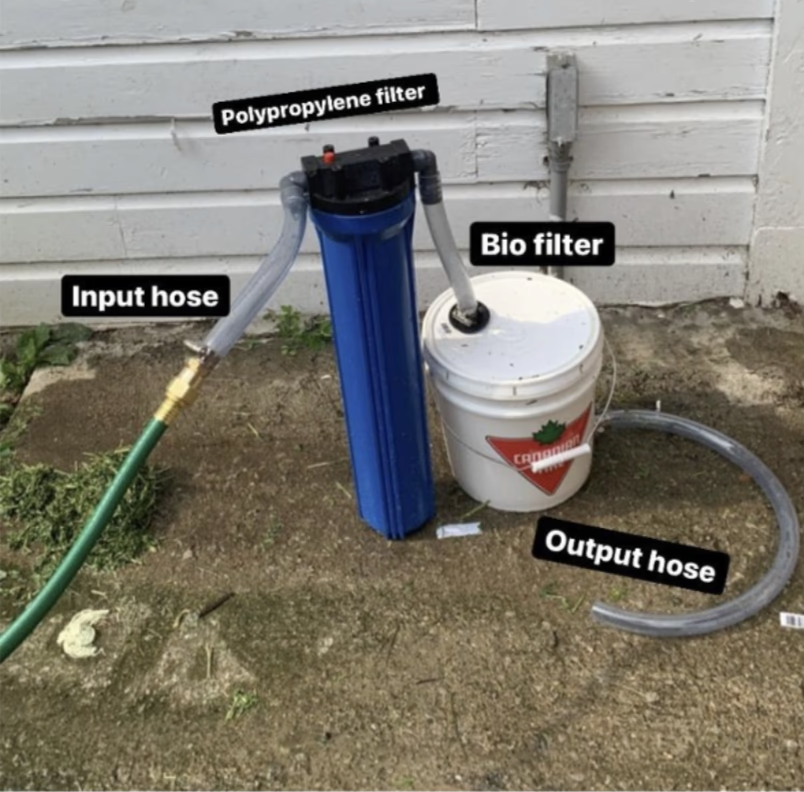
We designed a two-step filtration system that captures greywater from residential washing machines and prepares it for reuse:
- Polypropylene Filter to remove lint and larger particles
- Bio-char Filter to further purify water and reduce contaminants
Filtered water can then be reused for non-potable purposes such as irrigation or household cleaning.
Grey Return App
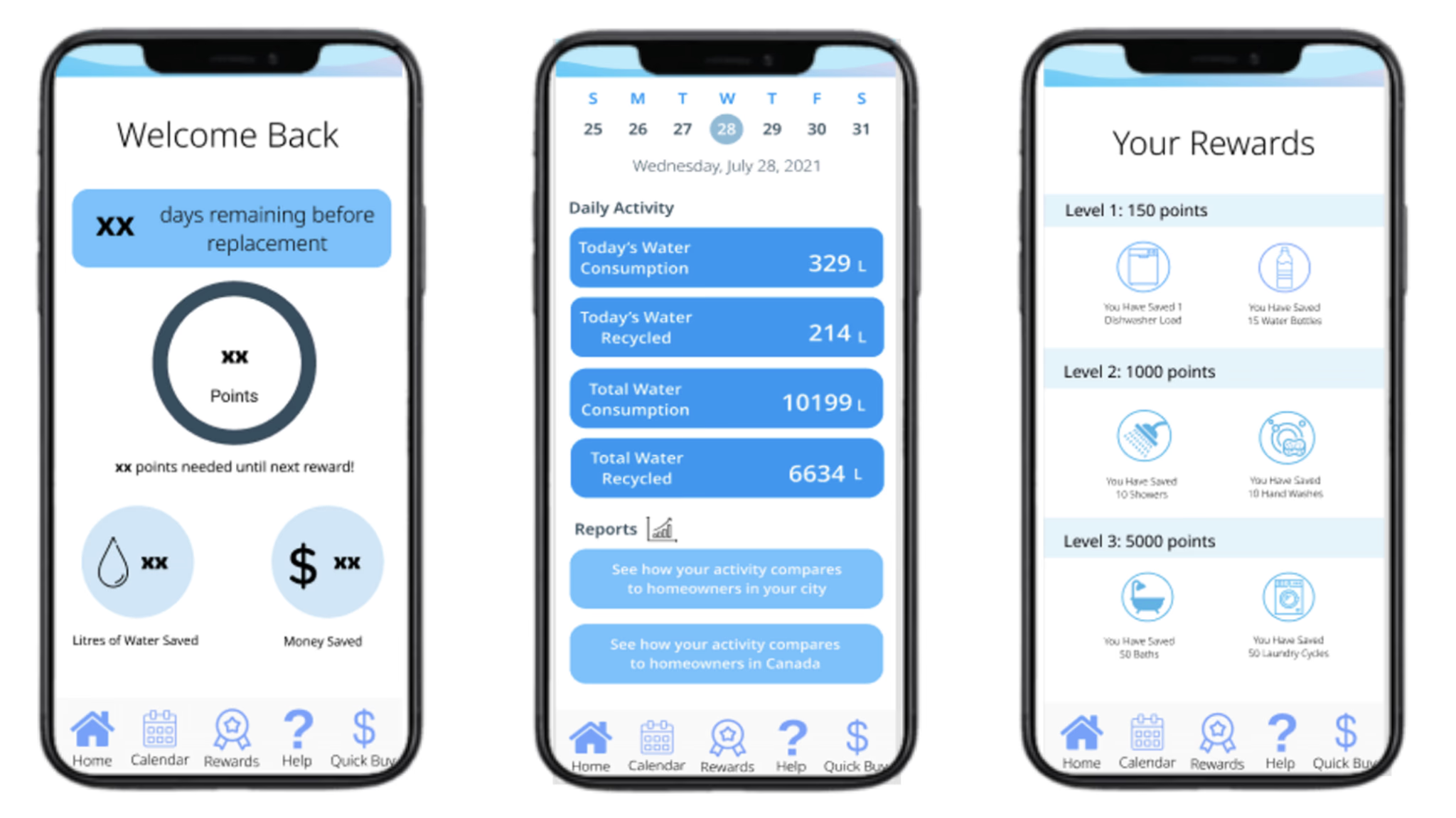
To reinforce behavior change, we designed a companion app that allows users to:
- Track water saved over time
- See estimated cost savings
- Visualize personal environmental impact
By making savings visible and tangible, the app helps users feel rewarded and motivated to continue sustainable behavior.
Design Process
Our process emphasized collaboration and iteration, with daily Zoom sessions to refine ideas, open communication, and shared ownership. Rather than dividing work rigidly, we leaned into each team member's strengths while staying aligned on the overall product vision. I was in charge of prototyping the app design and designing the logo.
Outcomes
We pitched Grey Return to SHAD program directors and external judges.
- Tied for Best Business Plan
- Tied for Best Product
- Tied for Best Overall
Beyond awards, the project validated that our solution balanced technical feasibility, user needs, and business viability.
Takeaways
- Process matters as much as outcomes. Strong collaboration and communication elevated both our product and our experience as a team
- Constraints sharpen creativity. Working within technical, time, and user constraints pushed us to design a solution that was realistic rather than speculative
- Sustainability must feel personal. People are more likely to adopt sustainable behaviors when benefits are clear, measurable, and directly relevant to their daily lives