Overview
As a Student Trustee for the Halton District School Board, representing over 65,000 students, I helped advocate for and evaluate a pilot program providing free menstrual products in public high schools.
This project required applying design thinking at a systems level: identifying an unmet user need, testing a solution through a controlled pilot, gathering qualitative feedback, and using evidence to scale the intervention across institutions.
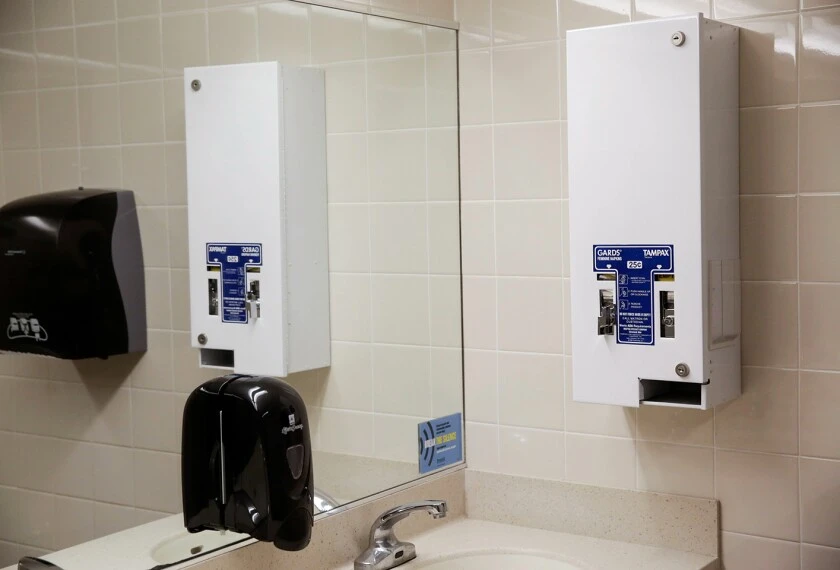
Context
In early 2020, a small number of Ontario school boards began piloting the distribution of free menstrual products in select schools. At the time, most schools still treated menstrual products as optional or personal items rather than essential resources, creating inequities for students who could not reliably access products during the school day.
Problem
Menstrual products were available in schools but required payment or special access, which:
- Created barriers for low-income students
- Increased stigma and hesitation around use
- Led to missed class time and discomfort
The core insight was that period products are a basic accessibility need, not a personal convenience, similar to toilet paper or soap.
However, to move policy forward, advocacy alone was not enough. Decision-makers needed evidence of real student impact, feedback over time, not one-off anecdotes, and a scalable, low-friction implementation model.
Solution
A pilot-based rollout of free menstrual products across four high schools: White Oaks Secondary School, Dr. Frank J. Hayden Secondary School, Craig Kielburger Secondary School, and Georgetown District High School.
- Placement of products in accessible locations
- Normalizing availability without requiring students to ask
- Observing adoption and reception over time
Process
1. Advocacy & Problem Definition
As Student Trustee, I raised the issue at the board level, framing it around equity, accessibility, and student experience rather than morality or charity.
2. User Research
I worked with the Student Senate to gather feedback from students across schools, focusing on whether products were being used, ease of access, and changes in comfort, attendance, or stress.
3. Iterative Evaluation
Feedback was collected over multiple meetings to understand how perception and usage evolved after initial rollout, distinguishing novelty effects from sustained impact.
4. Stakeholder Alignment
Insights were communicated to trustees and senior staff to inform decisions about scaling, funding, and long-term implementation.
Outcome & Impact
- Expansion of free menstrual products across the Halton District School Board
- Adoption of similar pilots by other Ontario school boards
- A province-wide partnership between the Ontario government and Shoppers Drug Mart to provide free menstrual products in all Ontario schools
What began as a small pilot ultimately influenced policy at a provincial scale.
Why This Matters from a Design Lens
This project mirrors how successful products scale: start with a clearly defined user need, test through a limited pilot, gather real-world feedback over time, and use evidence to justify broader rollout.
It reinforced my belief that good design, whether in software or policy, is about listening carefully, reducing friction, and designing systems that support people in moments that matter.